Niche Building 103
Part 3 of 5 of the “Building a Niche” Mini-Series
This post is the third installment of five where we’re pulling the curtain back on exactly what we did to start an industry niche focused on construction and trades businesses.
In case you missed the previous posts, here’s a quick summary of what we’ve shared so far:
101: Why/How We Decided to Niche
- Taking the plunge on nicheing
- Deciding on construction and trades
102: How We Started a Niche (aside from just saying we had one)
- Finding a place that not only had our niche clients but also provided a great source of education on this industry
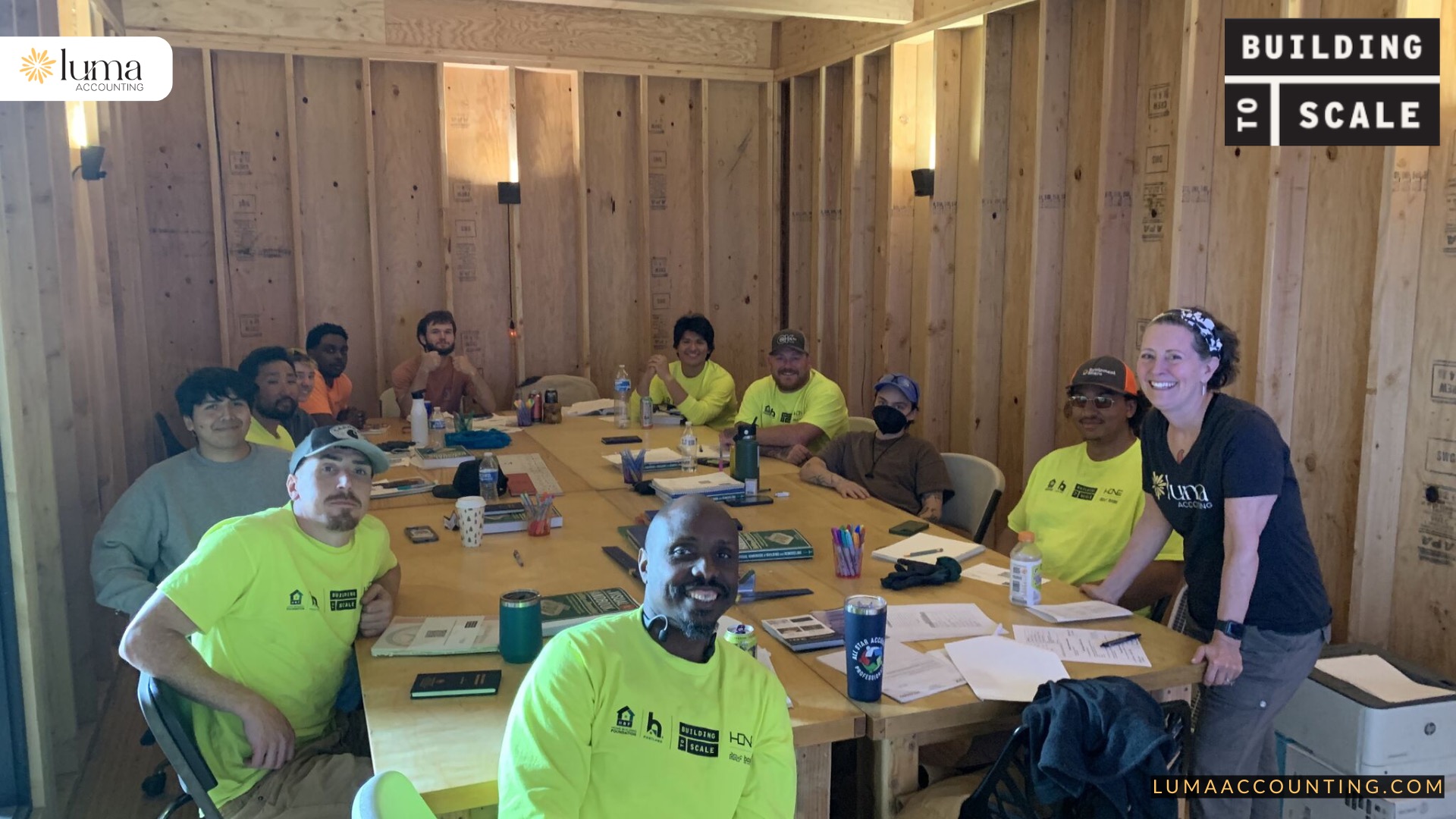
- Committing fully to getting in the room with people in the industry
- Focusing more on “getting smart” than on selling our services
- Using our website to prove we were serious about the niche
Now let’s talk about what we did WITHIN the firm to solidify our chosen niche….
One of the hardest parts about starting a niche is that feeling of “But I don’t know everything there is to know!” When you start listening to the things your niche clients are saying and facing, you start realizing how big the universe of knowledge regarding your niche really is. In our case:
- The different business models construction/trades companies use and how they price their jobs
- These businesses need time tracking that can capture not just the project being worked on, but the type of work being done – workers comp and liability insurance reviews require this level of detail
- Liens and lien waivers need to be understood and tracked to help businesses ensure they get paid
- Work in Progress (WIP) reporting that is needed for revenue recognition and at tax time
- Understanding prevailing wage jobs and the certified payroll reporting requirements entailed
- … and the list goes on and on
Understanding What Makes your Niche Different
Construction accounting is fundamentally different from many other industries. The timing of work versus payment, projects spanning across years, needing to track payroll and contractors across multiple cost codes for Workers Comp and liability insurers, the complexity of projects, and the importance of accurate job costing create challenges that generic bookkeeping simply doesn’t solve.
And let’s not even discuss the certified payroll reporting required for prevailing wage jobs.
Dialing in Your “Ideal Client Profile”
The more we talked with construction/trades business owners, and the more we heard from the team why certain clients stood out as “favorites” – and which clients were really rather hard to work with – we started to really hone in on what the ideal Luma client is (another blog post is brewing….).
And as we had potential construction/trades clients come to us, we began to REALLY understand what constituted an “ideal client” for us:
- Entrepreneurial mindset – the business owner truly wants to work ON the business, not IN it – and usually that they want to grow
- Sees the value in great bookkeeping/accounting – even if they’re not yet experiencing it themselves
- Sees the value of using technology and isn’t afraid to use it
- Is responsive and a good communicator
Knowing this, we have been able to add steps – or perhaps “tests” – into our discovery process with leads to help identify as early as possible who might fall within our “ideal”, and who almost certainly doesn’t. This saves both Luma and leads time, and potentially heartache down the road.
And ultimately, sticking to our Ideal Client Profile is a way of ensuring BEST. EXPERIENCE. EVER. for our team (while we clearly want B.X.E. for our clients, that won’t happen if the team isn’t experiencing B.X.E. themselves).
Organizing for Niches
We had already formed our team into “Lanterns” (usually called pods in other firms) and we decided to create a goal of having 2 of our 4 Lanterns focused exclusively on construction/trades. We found that we also had a lot of law clients in one of the other Lanterns and decided to begin putting any new legal clients there so that we could begin to focus on a Legal niche as well.
The more we could have our team members focused on similar types of clients, the more they would move towards “expert” status instead of “jack of all trades” – this would allow us to get better at all phases of the client lifecycle, including discovery, cleanup, onboarding and monthly support and every team member would likely be more efficient because they have “seen it before”.
Creating the Luma Accounting “Construction Crew”
Now that we had two Lanterns focused on construction and trades clients, we created a bi-weekly meeting of those Lantern Leaders, the Luminator (our Ops Manager) and our lead Luminary (Partner) that was owning the niche. We talk about:
- Anything the Lantern Leaders recently experienced with a current niche client that the rest of the group should know about
- The pipeline of niche leads that the Luminary is working on – a constant pulse on capacity is being taken to understand IF we get a new client to sign, which Lantern will take them and when would the Lantern Leader feel is a good time for onboarding
- Review of onboarding experiences so that we can adjust what is happening from discovery through the rest of the pipeline process
- Niche-specific software – how it is going with clients that are already using them and also any opportunities for innovation with clients that aren’t using any yet
- Understanding “Profit First for Contractors” – Shawn Van Dyke took the principles outlined by Michael Michalowicz in “Profit First” and created a construction niche version. These concepts can be exceptionally helpful to business owners that usually started out in construction/trades by doing the actual work and later ended up running a company
- Taking advantage of all of the learning resources that the National Association of Home Builders provides to members and then making sure the team is up to speed
These meetings are yet another way to ensure that our core value of “thrives on COLLABORATION” is front and center and cause all participants to reach out to each other whenever the need arises.
Creating a “Construction Crew” outside of Luma
We now actively seek out other bookkeepers, accountants and tax preparers that focus on construction/trades.
“But aren’t those your competitors??”
The answer is – probably not! There are a LOT of construction/trades companies out there so there is really no worry about scarcity of clients. And the more you start talking with other firms that work with these clients, the more you start to see some specialization happening:
- Tax preparers that have become experts at helping construction companies save money on surety bonds and bank financing
- Bookkeepers that specialize in certified payroll
- Firms that specialize specifically in one trade only like painting contractors
Having joined the Realize online accounting community founded by Jason Staats, we searched for firms focused on this niche and ended up starting a Construction Crew of firms across the nation that want to get together and talk about these things. Is there a better way to learn about your niche??
Next up: Niche Building 104: Spreading the Word About Your Niche
Luma Accounting is headquartered in Portland, Oregon. We serve small businesses across the U.S., supporting construction and trades companies with remote bookkeeping and accounting expertise. If you run a construction or trades business and need reliable bookkeeping or accounting services, we’d love to talk. Contact us today!