Are we experts in AI infrastructure or workforce issues in the accounting and construction/trades industries?
NO!
But since we are a part of the former, and interested in the latter, we decided to share with you some things we’ve learned over the past couple of years. You might just find yourself wanting to dig in further on your own.
First of all – You might think “Accounting and Construction – how exactly are those industries similar??”
The answer is: Impending retirements and workforce pipeline issues.
Luma Accounting, headquartered in Portland, Oregon, considered nicheing in construction and trades back in 2024, initially because both Kim and Heather had experience with construction and trades clients. If you’ve been reading along with us, you might recall that we joined the Home Building Association of Greater Portland back in 2024 as a way to become more knowledgeable about the industry and to meet local businesses. But over time, we became convinced that we had chosen wisely because:
- They BUILD and FIX things (a bit of a rarity in a landscape where the services industry now dominates almost all developed countries)
- They can’t offshore their labor, which matches Luma Accounting’s chosen model of having all U.S.-based team members
- Most construction/trades business owners do not have any background in bookkeeping/accounting – and yet they rely on accurate numbers to run their businesses. Luma Accounting really enjoys providing bookkeeping, accounting, and job costing support for construction and trades businesses so that the business owners can focus on the things only THEY can do.
While we are no experts on the subject, we wanted to share some information on what has happened and where each industry is currently.
The Accounting Workforce Crisis
Ask any firm owner in the accounting and tax world what the biggest problem they are facing is and you will likely hear “lack of talent” at the top of the list. Why? Here is a quick summary:
- Talent shortage is consistently the #1 concern accounting firm owners raise
- 75% of current CPAs are at or nearing retirement age – the coming wave of CPA retirements is colliding with a shrinking pipeline of new accounting grads
- Limited career advancement is a common reason people leave the field
- Many firms are turning to offshoring to fill the gap, something Luma Accounting has deliberately chosen not to do
The Construction/Trades Workforce Crisis
If you don’t work, or have a family member/friend, in the industry, you might be unaware of the workforce issues facing construction and trades companies.
- A large share of today’s construction workforce is approaching retirement age, taking decades of institutional knowledge with them
- A generation-long cultural push toward four-year degrees left the trades with a shrinking pipeline
- Skilled trades roles see notably high turnover compared to other industries
- Demand for construction labor keeps climbing as spending on infrastructure and building projects grows
And if you were thinking that the construction workforce gap couldn’t get any tighter… along comes AI.
The explosion of AI has caused an even larger explosion of infrastructure requirements – data centers, power grids, and everything else it takes to keep AI running. And given that we already had a big workforce gap before this, the gap has become a crevasse. Global data center capacity is now limited in large part to the lack of required tradespeople needed to do the electrical, mechanical, and plumbing work. Billions of dollars are pouring into this kind of infrastructure, and all of those dollars are useless without skilled hands to build it. Some industry watchers even expect planned AI infrastructure projects to get pushed out simply because there isn’t the labor to build them on schedule.
In other words, the construction and trades workforce shortage we just walked through isn’t catching up or even leveling off – it’s going to fall farther and farther behind given the enormous construction needs caused by AI.
Are you feeling hopeless?
Before anyone crawls under a rock, we want to share a little piece of magic which is happening right here in Portland, OR, created by an innovative builder who decided to take matters into his own hands.
In 2024, Nathan Young (CEO & Principal Builder of MODS PDX) decided to make a difference and with the help of Pete Victoor (MODS PDX Director of Planning and Operations), Kegan Flanderka (Principal at Base Design + Architecture), and Regan Schutz (Executive Director of the Home Building Foundation | HomeAid Portland), the Building To Scale “pre-apprentice” program was launched!
Most apprentice programs in the U.S. are run or sponsored by labor unions, industry associations, community colleges and workforce development boards. With Building To Scale, people who build for a living have taken on the project of building future construction/trades industry leaders.
The program’s mission?
Develop the next generation of passionate builders by giving them access to the building community.
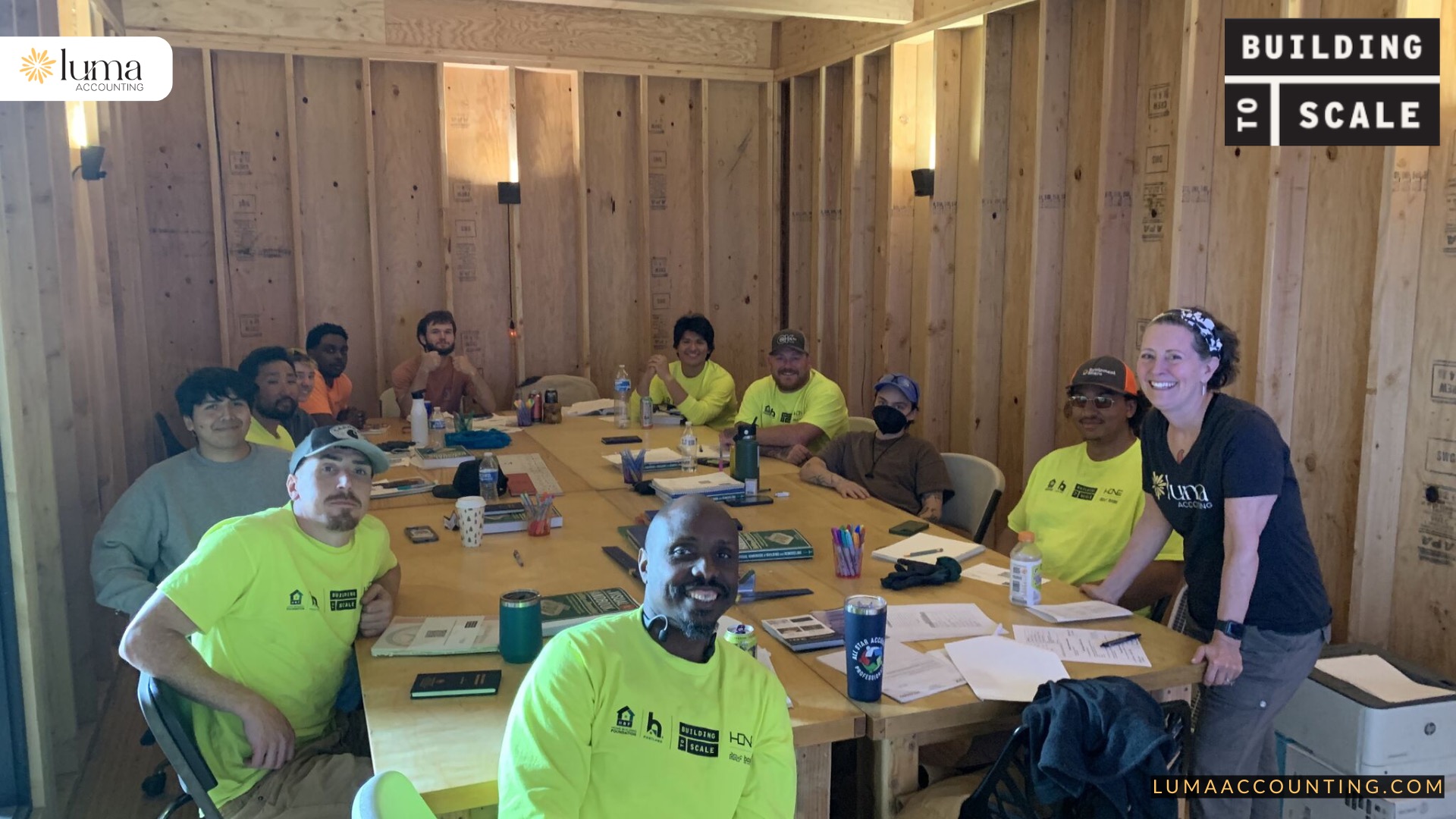
Most apprentice programs are several years in duration and are focused on equipping individuals with the specific skills associated with one trade (e.g., plumbing, electrical, etc.) so that they are job site ready at graduation. Building To Scale is different – over a 12 week period, they are exposed to a broad range of skills – carpentry, electrical, framing, etc. Much of the training takes place at the MODS PDX work facility but offsite projects happen as well – the summer cohort this year helped to build the main stage at the annual Pickathon music festival. These experiences on working job sites allow participants to experience how jobs are really run, but more importantly, they are being trained to have the mental toughness and flexibility needed in an environment that constantly throws curve balls. As one HBF Workforce Expansion in Residential Construction (WERC) committee member summed it up:
“These participants have gone through ‘The Nathan Young Crucible’ – they have gained the mindset and work ethic required to be successful on a job site.”
On August 14, 2026, the 3rd Building To Scale cohort graduated from the program. It was clear from the recognition given to each graduate by the program leaders, and the words that each participant spoke about their experience, that both the graduates and the program leaders had formed a very strong bond (let’s just say that tissues were needed). With this 3rd cohort, the HBF WERC committee realized that the next step in making the program fully holistic was to invite construction, trade and supplier companies that have a culture aligned with the values of younger generation workers, as well as the HR infrastructure to ensure opportunities for growth. In addition to family and friends of the graduates, there were leaders from the industry and from workforce initiatives across the state in attendance so that, having seen what this program produces, they can help find employment opportunities.
Luma Accounting was thrilled to be asked to hold sessions with the cohorts to discuss “financial literacy” topics such as savings plans; 1099 contractor v. W-2 employee and associated tax implications; retirement savings products; etc. The program leaders are truly focused on arming the participants with the knowledge and mindset needed not only to be successful in their careers, but also in their personal lives as it relates to building wealth.
Perhaps the most meaningful outcome for Kim was having graduates come over specifically to say thank you for spending time with them – Luma Accounting is so excited for them to start their careers in the built environment and perhaps start firms of their own one day!
How does it feel to get to participate in a program like Building To Scale?
BEST. EXPERIENCE. EVER. !!
If you’re a Portland-area construction or trades business owner and you’re as invested in workforce development as we are, we’d love to meet you – you can find us at HBA events, at the Building To Scale worksite, or perhaps in a local coffee shop. And follow along with Luma Accounting on LinkedIn, Facebook and Instagram to see the adventures of the next Building To Scale cohort!
Need reliable bookkeeping, accounting, job costing, and financial clarity support for your Portland or U.S.-based construction or trades business? Contact Luma Accounting today to start the conversation. Headquartered in Portland, Oregon, Luma Accounting works with small businesses nationwide so you can focus on the things only YOU can do.